Author Archive

Transportation Safety Administration

The U.S. House of Representatives has the following to say about the TSA:

Since its inception, TSA has hired over 137,000 employees, grown into a mammoth bureaucracy
of 65,000 employees, spent almost $57 billion, yet has failed to detect any major terrorist threat
since 9/11, including the Shoe Bomber, the Underwear Bomber, the Times Square Bomber, and
the Toner Cartridge Bomb Plot. Congress created TSA to be a lean organization that would
analyze intelligence and set risk-based security standards for the U.S. transportation system.
Today, TSA suffers from bureaucratic morass and mismanagement. The agency needs to
properly refocus its resources on assessing threats and intelligence, instituting appropriate
regulations, and auditing and adjusting security performance. TSA cannot do this effectively as
a massive human resources agency.

Today, TSA‘s screening policies are based in theatrics. They are typical, bureaucratic responses to failed security policies meant to assuage the concerns of the traveling public.

The full report can be had HERE.

The report is great for those who did not already know its findings, so their education is important. However, I hope people will understand that the TSA is not a “safety” endeavor at its core. It is a planed desensitization of the people to an ongoing and increasing attempt at the removal of our rights. Don’t be fooled by the reports ulterior motive to distract you from the true cause of the TSA.

My boys.

Yesterday was NHL jersey night at practice. My two favorite hockey players.

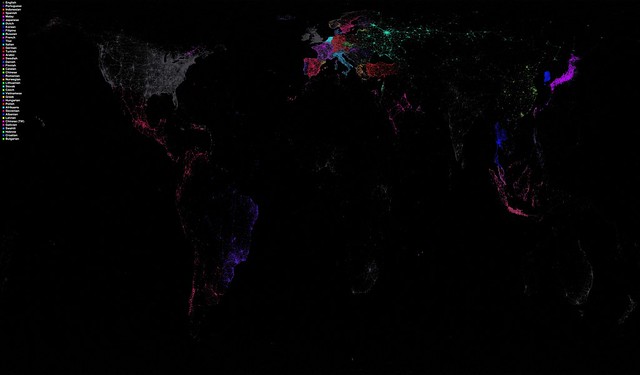
Lingua Twitter

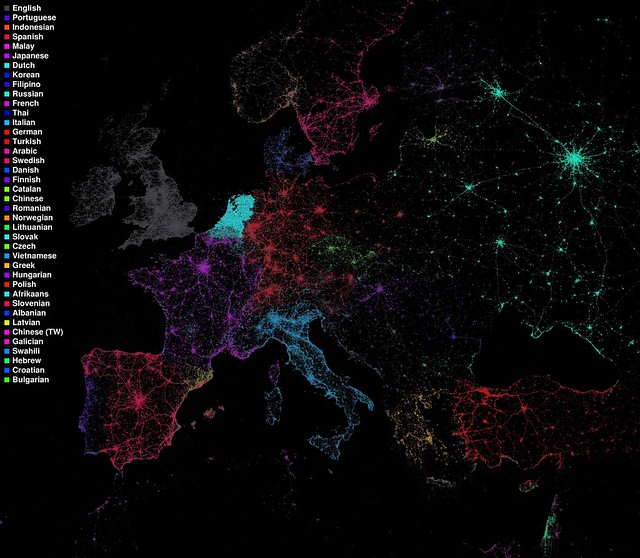
This is an excellent example of how powerful metadata can be easily parsed from the interwebs. It’s also really cool. Kudos to Eric Fischer and Mike McCandless for doing the work and to Google for making the CLD OSS.

Language communities of Twitter
Language communities of Twitter (European detail)

#58 tribute. Two minutes of noise.

Paolo Simoncelli thought it fitting that rather than holding a moment of silence in memory of his son, the racing world instead should make some noise in his celebration. So around the world as well as at the final round of MotoGP in Valencia, racing fans everywhere took part in making some noise for Marco. My friend Chuck from PA was one of those celebrating Marco. Thanks Chuck.

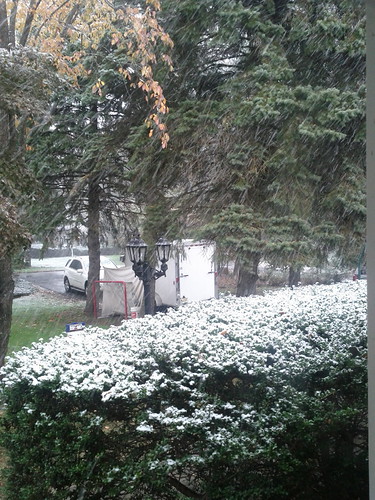
Nor’easter 2011

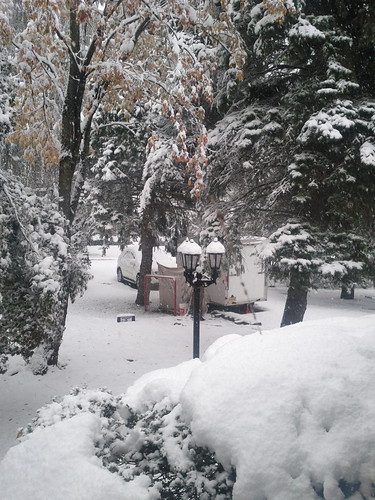
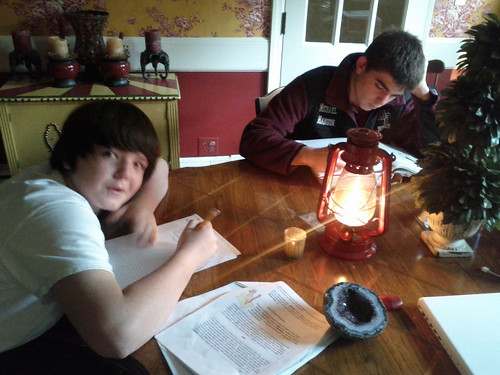
Here are a few pictures and a video of the storm this October. It was the heavy wet snow that did the damage. We were without electricity, heat and water for 6 days. That’s unusual for our area of the country. We made do with the kerosene lamps and flashlights and used melted snow to flush the commodes.

picplz_uploadpicplz_uploadpicplz_uploadpicplz_upload

Legal Tender. Not in Louisiana.

There is new legislation in Louisiana that in certain cases prevents citizens from trading “legal tender” (specifically cash) for goods.

shall not enter into any cash transactions in payment for the purchase of junk or used or secondhand property

This will undoubtedly make its way through the federal court system and it will be interesting to follow, particularly in that the legislation applies to lawful transactions. There is no question to the lawfulness of the transaction, the law simply makes unlawful the trade of cash for goods in certain lawful transactions.

Read the article by Thad D. Ackel, Jr. Esq.

In addition to stifling business, the law includes a tangible attack on privacy. From the article liked above:

For every transaction a secondhand dealer must obtain the seller’s personal information such as their name, address, driver’s license number and the license plate number of the vehicle in which the goods were delivered.

There is a theme that this legislation adheres to which is making its way into many aspects of our lives (think airport security). It seems Uncle Sams’ believes it best to treat everyone as a criminal because someone is a criminal.

Situations like these always seem to bring me back to the simplicity of our founding fathers ideas of government. At the inauguration of Thomas Jefferson in 1801 he said:

a wise and frugal Government, which shall restrain men from injuring one another, shall leave them otherwise free to regulate their own pursuits of industry and improvement, and shall not take from the mouth of labor the bread it has earned. This is the sum of good government, and this is necessary to close the circle of our felicities.

I love how simple that is and how it exposes our distance from it today. I corresponded briefly with Thad Ackel and promised I’d make this post and promote his efforts to see this legislation corrected.

#58

Super cool. No pun intended.

Trackdays with TPM

With race season being over and some good weather left in autumn we headed down to NJMP again for a trackday weekend. Theo and I both arrived early Saturday morning instead of Friday night. The ride down was smooth and quick and so was pit setup. The morning was cool and the skies were clear. We both sat out the first session while the other groups warmed up the track for us. John and Justin were pitted next to us and Hunter was just a few doors down. As a special treat our friends Chuck and Ellen came to visit for the day. Saturday was a great day of riding and visiting with friends. Other than tearing up a tire (video below) in one day we had at least 5 incident free sessions before we retired to an early dinner at the Old Oar House Irish Pub. It was a fitting end to the day. Back at camp we downloaded the MotoGP qualifying session and watched the professionals for a while. We both slept like babies until about 6:25am when someones car alarm repeatedly went-off and woke me early. I let Theo sleep past 8:00am. Another friend of ours, Todd, arived Sunday morning and set up across from us. He is a fellow CCS racer. John and Hunter stayed for Sunday as well so we had another day of good company in addition to good riding. At one point early in the day my throttle housing spun on my handle bar causing the cable to impede my brake lever. The result was a pucker inducing runoff in T1 due to having only about half my usual braking power. Moments like those really remind you of the importance of careful bike preparation and maintenance. It was a simple 10 minute fix for a situation I will make sure never happens again. We ended Sunday a session early too. We were spent. Going fast on a motorcycle while exhausted is not advisable. I’m getting wise enough to know when to call it quits. So, back to the Oar House for dinner. The trip home was going great until I witnessed a hit and run accident on the NJTP between a semi and a small SUV. It happened right in front of me. I followed the truck for about 10 miles and finally, he pulled over in a diner where I was finally able to get the police involved. I hope the people in the car are ok. There was no doubt in my mind that they would be helped by other motorists as the traffic was heavy so I wanted to make sure they had a chance at some justice against the other driver. I hope it works out for them. So it seems the track action is officially over unless we get lucky and can go in November.

The case for privacy in the electronic age.

This is likely the finest case for electronic privacy I have encountered and is worth reading.

A Cypherpunk’s Manifesto

by Eric Hughes

Privacy is necessary for an open society in the electronic age. Privacy is not secrecy. A private matter is something one doesn’t want the whole world to know, but a secret matter is something one doesn’t want anybody to know. Privacy is the power to selectively reveal oneself to the world.

If two parties have some sort of dealings, then each has a memory of their interaction. Each party can speak about their own memory of this; how could anyone prevent it? One could pass laws against it, but the freedom of speech, even more than privacy, is fundamental to an open society; we seek not to restrict any speech at all. If many parties speak together in the same forum, each can speak to all the others and aggregate together knowledge about individuals and other parties. The power of electronic communications has enabled such group speech, and it will not go away merely because we might want it to.

Since we desire privacy, we must ensure that each party to a transaction have knowledge only of that which is directly necessary for that transaction. Since any information can be spoken of, we must ensure that we reveal as little as possible. In most cases personal identity is not salient. When I purchase a magazine at a store and hand cash to the clerk, there is no need to know who I am. When I ask my electronic mail provider to send and receive messages, my provider need not know to whom I am speaking or what I am saying or what others are saying to me; my provider only need know how to get the message there and how much I owe them in fees. When my identity is revealed by the underlying mechanism of the transaction, I have no privacy. I cannot here selectively reveal myself; I must always reveal myself.

Therefore, privacy in an open society requires anonymous transaction systems. Until now, cash has been the primary such system. An anonymous transaction system is not a secret transaction system. An anonymous system empowers individuals to reveal their identity when desired and only when desired; this is the essence of privacy.

Privacy in an open society also requires cryptography. If I say something, I want it heard only by those for whom I intend it. If the content of my speech is available to the world, I have no privacy. To encrypt is to indicate the desire for privacy, and to encrypt with weak cryptography is to indicate not too much desire for privacy. Furthermore, to reveal one’s identity with assurance when the default is anonymity requires the cryptographic signature.

We cannot expect governments, corporations, or other large, faceless organizations to grant us privacy out of their beneficence. It is to their advantage to speak of us, and we should expect that they will speak. To try to prevent their speech is to fight against the realities of information. Information does not just want to be free, it longs to be free. Information expands to fill the available storage space. Information is Rumor’s younger, stronger cousin; Information is fleeter of foot, has more eyes, knows more, and understands less than Rumor.

We must defend our own privacy if we expect to have any. We must come together and create systems which allow anonymous transactions to take place. People have been defending their own privacy for centuries with whispers, darkness, envelopes, closed doors, secret handshakes, and couriers. The technologies of the past did not allow for strong privacy, but electronic technologies do.

We the Cypherpunks are dedicated to building anonymous systems. We are defending our privacy with cryptography, with anonymous mail forwarding systems, with digital signatures, and with electronic money.

Cypherpunks write code. We know that someone has to write software to defend privacy, and since we can’t get privacy unless we all do, we’re going to write it. We publish our code so that our fellow Cypherpunks may practice and play with it. Our code is free for all to use, worldwide. We don’t much care if you don’t approve of the software we write. We know that software can’t be destroyed and that a widely dispersed system can’t be shut down.

Cypherpunks deplore regulations on cryptography, for encryption is fundamentally a private act. The act of encryption, in fact, removes information from the public realm. Even laws against cryptography reach only so far as a nation’s border and the arm of its violence. Cryptography will ineluctably spread over the whole globe, and with it the anonymous transactions systems that it makes possible.

For privacy to be widespread it must be part of a social contract. People must come and together deploy these systems for the common good. Privacy only extends so far as the cooperation of one’s fellows in society. We the Cypherpunks seek your questions and your concerns and hope we may engage you so that we do not deceive ourselves. We will not, however, be moved out of our course because some may disagree with our goals.

The Cypherpunks are actively engaged in making the networks safer for privacy. Let us proceed together apace.

Onward.

Eric Hughes <hughes@soda.berkeley.edu>

9 March 1993